
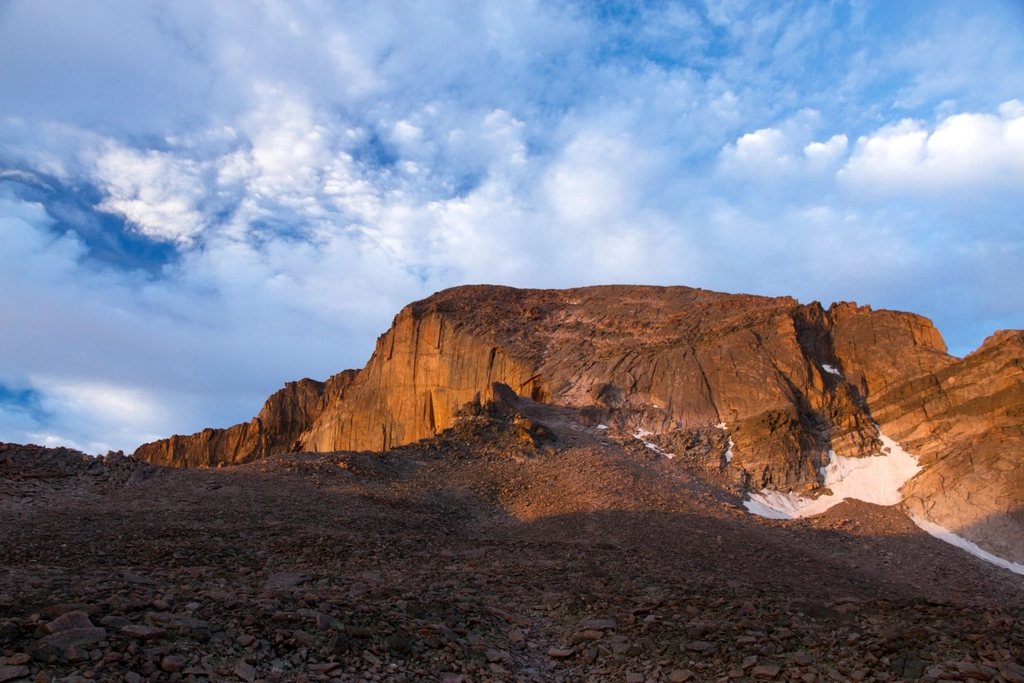
Most of us who love these parks live near sea level, and the first day at 9,000 feet (2,740 m) has a way of reminding us of that. The headache arrives around dinner, the legs feel heavy on a trail that looks flat, and a night of broken sleep follows. None of it is dangerous for most people, and most of it is avoidable with a bit of planning. This guide covers what altitude does to a lowlander, which parks and trailheads sit high enough to matter, and the routine we use to arrive ready to hike rather than ready for a nap.
Where the high ground actually is
Altitude is a surprisingly local problem. Yosemite Valley sits at about 4,000 feet (1,200 m), low enough that most visitors feel nothing. Drive up to Tuolumne Meadows and you are at 8,600 feet (2,620 m); Tioga Pass, the highest highway pass in California, is 9,943 feet (3,031 m). Half Dome’s summit is 8,836 feet (2,693 m), and Clouds Rest just under 9,930 feet (3,027 m). In Rocky Mountain National Park the numbers are higher still: the Bear Lake trailhead is at 9,475 feet (2,888 m), Trail Ridge Road crests at 12,183 feet (3,713 m), and Longs Peak tops out at 14,259 feet (4,346 m). Even the gateway town of Estes Park sits at 7,522 feet (2,293 m), so you are sleeping high before you hike.
Yellowstone is a high plateau: the Old Faithful area is around 7,350 feet (2,240 m) and Dunraven Pass is 8,859 feet (2,700 m). Glacier is lower than its scenery suggests, with Logan Pass at 6,646 feet (2,026 m), and the Grand Canyon’s South Rim is a deceptive 7,000 feet (2,130 m), high enough to leave a sea-level hiker breathless on the climb back out. Zion, Acadia, Olympic and the Smokies rarely push above 6,700 feet (2,040 m) and are not altitude problems for most people.
What thin air does to a lowlander
Air pressure at 10,000 feet (3,050 m) is roughly 70 percent of sea level, so every breath delivers less oxygen. The body responds within hours by breathing faster and deeper, and over days by producing more red blood cells. In the gap between those two adjustments, many people develop acute mountain sickness: headache, nausea, loss of appetite, fatigue and poor sleep, usually starting 6 to 12 hours after arrival at altitudes above about 8,000 feet (2,440 m). Roughly a quarter of visitors who travel from low elevation to sleep above 8,000 feet report some symptoms. It is not related to fitness; marathoners get it as readily as anyone, sometimes more so because they push harder on the first day.
The severe forms, fluid on the lungs or swelling of the brain, are rare at the elevations most park hikers visit and almost always follow ignored warning signs. The rule that matters is simple: if symptoms are getting worse rather than better, do not go higher, and if you cannot walk a straight line or are short of breath at rest, descend immediately.
Arrive a day early and sleep low
The single most effective thing we do is add a night at moderate elevation before the first big hike. Flying into Denver, at 5,280 feet (1,609 m), and spending a night there before heading to Estes Park is a real acclimatization step. For the Sierra, a night in Yosemite Valley before driving to Tuolumne makes a noticeable difference. The old mountaineering rule of climbing high and sleeping low applies to weekend hikers too: a day hike to 11,000 feet (3,350 m) followed by a night at 8,000 feet is far easier on the body than moving camp upward every day.
Once above 8,000 feet, wilderness medicine guidelines suggest limiting the increase in sleeping elevation to about 1,000 to 1,600 feet (300 to 500 m) per night, with a rest day every three or four days. Few park itineraries are long enough for that to apply literally, but the spirit of it does: do not drive from sea level to a 10,000-foot campground and start a 12-mile (19 km) hike the next morning.
Drink, eat and slow down
Dry mountain air and faster breathing pull water out of the body, and dehydration mimics and worsens altitude symptoms. We aim for roughly a liter of water every two hours of hiking above 8,000 feet, plus salty food, and we skip alcohol for the first two nights. Appetite often drops, so we pack food that is easy to eat when nothing sounds good: crackers, dried fruit, nut butter. Caffeine is fine and may help with the headache. Over-the-counter painkillers handle mild symptoms; a prescription medication that speeds acclimatization is an option some doctors recommend for people with a history of altitude trouble, but it needs to be discussed before the trip, not at the trailhead.
Pace is the other lever. A comfortable sea-level walking speed is too fast at 10,000 feet. We slow to the pace at which we can hold a conversation and accept that the first day above treeline is not the day for personal records.
Weather, sun and cold at elevation
Altitude brings its own weather. Ultraviolet exposure increases about 4 percent for every 1,000 feet (300 m) of elevation, so sunburn at 12,000 feet arrives fast even in cool air. Afternoon thunderstorms build over the Rockies almost daily in July and August, and exposed tundra above treeline is no place to be when they arrive; the standard advice is to be heading down from high points by noon. Temperatures drop about 3.5 degrees Fahrenheit per 1,000 feet (6.5 C per 1,000 m), so a pleasant morning in Estes Park can be a sleeting afternoon on Trail Ridge Road, in any month of the year.
- Sleep at moderate elevation for at least one night before hiking above 9,000 feet.
- Drink steadily, eat even without appetite, skip alcohol for two nights.
- Start early and be below the high point before afternoon storms.
- Pack sun protection, a warm layer and a rain shell even for short hikes.
- Turn around if symptoms worsen; descent is the only reliable cure.
Choosing the first hike
We save the big objectives for day three. On the first day at altitude, a walk of 3 to 5 miles (5 to 8 km) with modest gain is plenty, and the Rockies and Sierra have beautiful ones: the lake loops near Bear Lake, the meadow walks around Tuolumne, the boardwalks of Yellowstone’s geyser basins. By the third morning the headache is gone, the legs come back, and the ridge that seemed absurd on arrival day looks like exactly what we came for.