
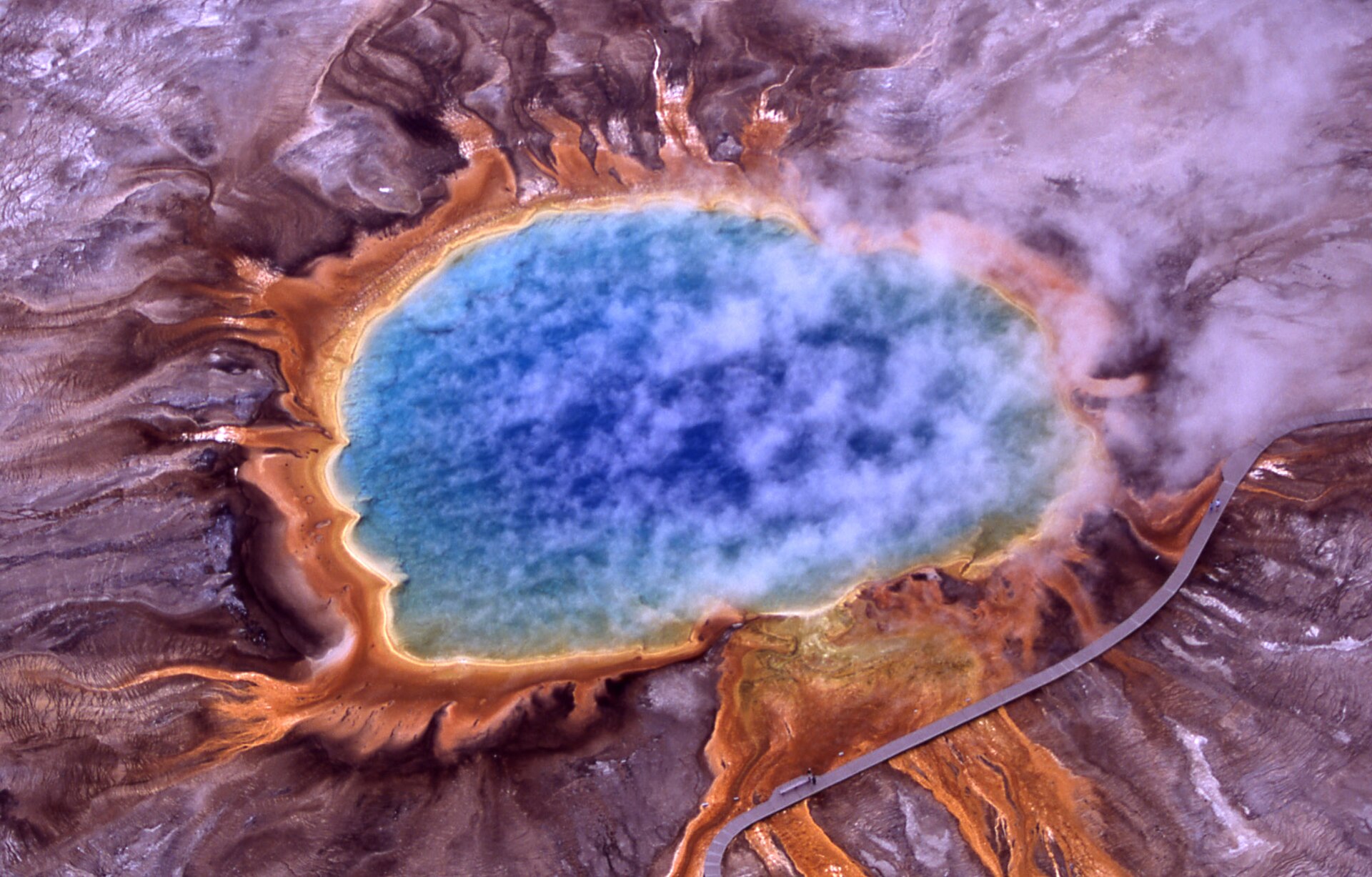
Pick Yosemite if you want granite walls, waterfalls and big sequoias packed into a compact, valley-centered trip. Pick Yellowstone if you want geysers, hot springs and big wildlife spread across a huge landscape. Most first-timers should choose one and save the other.
How do the two parks differ on the trail?
The terrain is the first thing to weigh. The two parks give you very different days on foot.
Yosemite is a granite park. Glaciers carved the walls over a very long time. The signature sights sit close together around Yosemite Valley. You get waterfalls, sheer cliffs, panoramic viewpoints and giant sequoias in a small area.
Yellowstone is a volcanic park. The ground steams, bubbles and erupts. Trails lead past geysers, hot springs, mud pots, canyons and lakes. The park is much larger, so the sights are spread out.
Here is how that looks in practice:
- Yosemite: classic viewpoints, waterfall trails, climbs to granite summits, sequoia groves.
- Yellowstone: boardwalks through thermal basins, canyon rims, remote backcountry, wildlife valleys.
- Crowds in Yosemite: they funnel into the valley, so it feels busy in summer.
- Crowds in Yellowstone: they spread along a big loop road, and you can find quiet by walking away from the parking lots.
Signature hikes
Yosemite is known for the Mist Trail, the Glacier Point views and the ascent of Half Dome.
Treat thermal areas with care. Stay on the boardwalks and keep children close.
What do entry, fees and permits look like?
Fees are simple. Rules around entry change more often, so check them before you lock in dates.
Both parks charge $35 for each private vehicle, and the ticket lasts seven days in a row. A motorcycle costs $30. Arriving on foot or by bike costs $20 per person.
If you visit several parks in a year, an America the Beautiful pass costs $80 and covers entry for U.S. residents.
Visitors from abroad pay more. Travelers who live outside the U.S. and are 16 or older owe an extra $100 each at both parks. That charge sits on top of the vehicle fee. A nonresident annual pass costs $250 and removes it.
Timed entry
For 2026, neither park requires a day-use entrance reservation. Yosemite has used timed-entry systems in past years, so confirm the current rules before you travel. Without a reservation limit, parking fills early and entrance lines grow long. Arrive early or visit midweek.
Permits that still matter
- Half Dome: a preseason lottery in March, plus daily lotteries during the cable season.
- Overnight wilderness trips in Yosemite: a permit is required.
- Backcountry trips in Yellowstone: a permit is required.
Confirm all of this on the official park pages or Recreation.gov. Permit rules shift from year to year.
When should you go, and how far apart are they?
Season shapes both trips. The best months differ for each park.
Yellowstone is most reliable from June through September. All entrances and loop roads are normally open then. Snow can fall in any month, so pack layers even in July. Winter brings very cold nights.
Yosemite is at its best in late spring, when snowmelt feeds the waterfalls. May is prime. Snow covers much of the park from roughly November through May. Tioga Pass is closed for much of that time. Yosemite Valley stays open all year.
May and September work well at both parks. They ease the July and August crush while keeping most facilities open. Check which roads are running before you go.
Getting there
- Yosemite: it sits in California. Most visitors drive in from San Francisco or Los Angeles.
- Yellowstone: it spans Wyoming, Montana and Idaho. Bozeman and Jackson are the closest major airports. Plan on a rental car.
The two parks are roughly 850 to 1,000 driving miles apart. That is a long haul, so do not plan to cover both in one short trip.
Which park fits your type of hiker?
Match the park to what you want from the day. Use this as a quick guide.
- Day-tripper: Yosemite. The best sights sit close together in the valley. Yellowstone asks for long drives between areas.
- Backpacker: either park works. Yosemite’s high country is quiet above the valley. Yellowstone has a huge network of remote trails.
- Wildlife watcher: Yellowstone. Bison, elk, bears and wolves roam there. Lamar Valley is a well-known place to look, especially at dawn and dusk.
- Bird watcher: Yosemite has a long bird list and is a designated Important Bird Area.
- First-time park visitor: choose by the scenery you want. Pick waterfalls and granite for Yosemite. Pick geysers and wildlife for Yellowstone. Give Yellowstone at least four days and a car.
Accessibility
Both parks have accessible visitor centers and major sights. Yosemite also has paved trails around the valley and a free shuttle. Yellowstone has no public transport inside the park.
The Access Pass gives free lifetime entry to eligible U.S. citizens and permanent residents with permanent disabilities.
Whichever you pick, carry water, layers and a paper map. Phone routing is unreliable inside both parks.
Related reading
- How Park Passes, Timed Entry and Permit Lotteries Actually Work
- Hiking High: Altitude Advice for Sea-Level Visitors to the Rockies and Sierra
Sources
- Yosemite National Park vs Yellowstone … (meghanthetravelingteacher.com, accessed 2026-11-10)
- Yellowstone vs Yosemite: which US national park is for you? (trafalgar.com, accessed 2026-11-10)
- Yosemite vs Yellowstone for First-Timers (2026) – TrailVerse (nationalparksexplorerusa.com, accessed 2026-11-10)
Photo: Grand prismatic spring, by Jim Peaco, National Park Service, Public domain (Wikimedia Commons)